- October 27, 2026
- by Pixlgrow Team
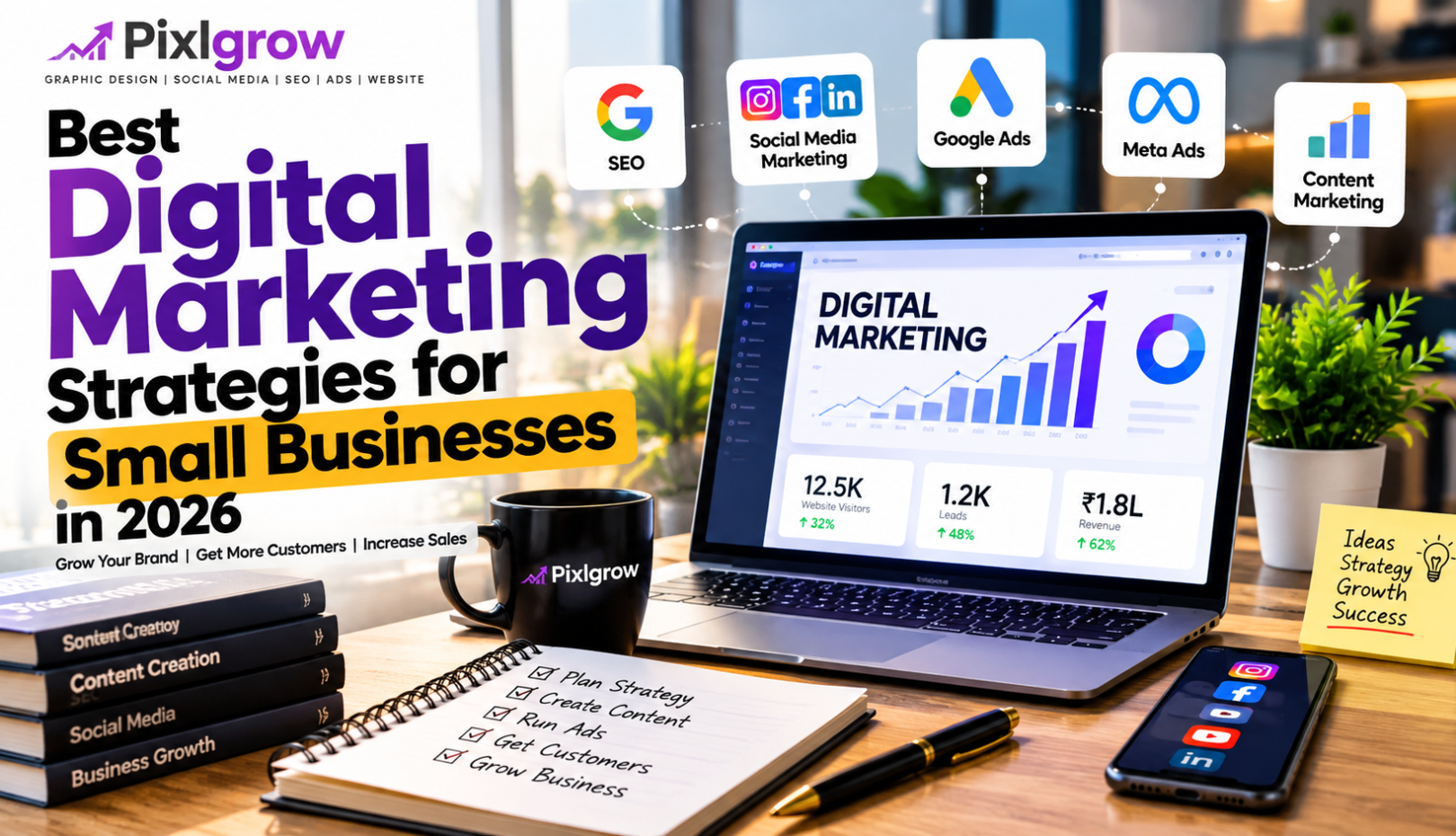
Best Digital Marketing Strategies for Small Businesses in 2026
Introduction to Digital Marketing Strategies likh.
Published by Pixlgrow Team
Small businesses need more than just a good product or service to succeed in today’s competitive market. They also need a strong online presence, a clear marketing strategy, and the ability to reach the right customers at the right time.
Digital marketing helps businesses connect with potential customers through search engines, social media, websites, and online advertising. With the right approach, even a small business can build brand awareness, generate leads, and grow its customer base.
In this guide, we will explore the best digital marketing strategies for small businesses in 2026.
1. Build a Professional Business Website
Your website is often the first place potential customers visit to learn about your business. A professional website helps establish trust and makes it easier for customers to understand your services.
An effective business website should include:
- A clear description of your products or services.
- Contact information and a WhatsApp contact option.
- Mobile-friendly design and fast loading speed.
- Customer testimonials and portfolio examples.
- Clear calls to action, such as “Get a Free Consultation.”
A well-designed website can help turn visitors into enquiries and potential customers.
2. Invest in Search Engine Optimization (SEO)
Search Engine Optimization helps your website appear in relevant search engine results. When people search for services related to your business, SEO can help them discover your website.
Important SEO practices include:
- Researching relevant keywords.
- Writing useful, original website content.
- Optimizing page titles and meta descriptions.
- Improving website speed and mobile usability.
- Using internal links between related pages.
- Earning relevant, trustworthy backlinks.
For example, a local service provider could target keywords related to its service and location. Focus on creating genuinely helpful content instead of repeating keywords unnecessarily.
SEO is a long-term strategy, and rankings are not guaranteed.
3. Optimize Your Google Business Profile
For businesses serving a particular city or local area, a Google Business Profile can help customers discover them through Google Search and Maps.
To improve your profile:
- Keep your business name, address, phone number, and hours accurate.
- Select the most relevant business categories.
- Add genuine photographs of your work and business.
- Describe your services clearly.
- Encourage satisfied customers to leave honest reviews.
- Respond professionally to customer reviews and questions.
A complete and accurate profile helps potential customers find useful information before contacting you.
4. Use Social Media Marketing
Social media platforms give businesses opportunities to connect with their audiences, demonstrate expertise, and build relationships with potential customers.
Choose platforms based on your target audience and business goals. Instagram and Facebook can be useful for visual content and local engagement, while LinkedIn may suit businesses targeting other businesses.
Consider publishing:
- Educational posts and practical tips.
- Product demonstrations and service highlights.
- Short-form videos and Reels.
- Customer success stories, with permission.
- Frequently asked questions.
- Behind-the-scenes content.
Maintain a consistent posting schedule and respond to genuine enquiries. Focus on useful content rather than simply posting promotional messages every day.
5. Run Targeted Google Ads
Google Ads can help businesses reach people searching for relevant products and services.
For example, a business offering website design services could target searches related to website design in its service area.
Before launching a campaign:
- Define your campaign objective.
- Identify relevant keywords and target locations.
- Write clear, accurate advertisements.
- Create a relevant landing page.
- Set a budget you can afford.
- Track enquiries, calls, and conversions.
Start with a manageable budget, review performance regularly, and adjust campaigns based on actual results. Paid advertising requires testing, and results depend on factors such as competition, targeting, and the quality of your offer.
6. Try Meta Ads for Audience Reach
Meta Ads allow businesses to advertise across platforms such as Facebook and Instagram.
They can be useful for introducing a brand to new audiences, promoting offers, generating enquiries, and reconnecting with eligible previous website visitors.
To improve campaign performance:
- Use creative images and videos.
- Communicate one clear benefit.
- Include a strong call to action.
- Target audiences relevant to your offer.
- Test different creative approaches.
- Measure the cost and quality of leads.
Avoid judging a campaign only by likes or impressions. Focus on whether it supports your actual business objective.
7. Create Helpful Content
Content marketing involves publishing useful information that helps customers understand their problems and possible solutions.
Examples include blog articles, guides, videos, case studies, and frequently asked questions.
A digital marketing agency could publish articles about SEO, social media marketing, Google Ads, website design, and online brand growth.
Helpful content can support SEO, answer customer questions, and establish your business as a useful source of information.
Always prioritize accuracy, originality, and the needs of your audience.
8. Use Professional Graphic Design and Video Editing
Visual communication plays an important role in how people perceive a business. Consistent branding can make your business look more professional across websites, advertisements, and social media.
Useful creative assets include:
- Social media post designs.
- Promotional banners and advertisements.
- Product and service videos.
- Reels and short-form videos.
- Brand identity materials.
- Website graphics and portfolio presentations.
Choose visuals that match your brand identity and communicate your message clearly. Good design should support your marketing objective rather than distract from it.
9. Track Your Marketing Performance
Digital marketing becomes more effective when you measure results and learn from them.
Tools such as Google Analytics and Google Search Console can help you understand website traffic, search performance, and visitor behaviour. Advertising platforms also provide campaign performance data.
Track metrics that match your goals, including:
- Website enquiries and contact form submissions.
- Qualified leads and sales.
- Cost per lead.
- Website traffic from relevant sources.
- Search impressions and clicks.
- Advertising conversion rates.
Review your results regularly and use the information to improve your strategy.
10. Create a Practical Digital Marketing Plan
Small businesses do not need to use every marketing channel at once. Begin with the activities that best match your audience, resources, and objectives.
A simple 30-day plan could look like this:
Week 1: Build the foundation
Review your website, define your target audience, and identify relevant keywords.
Week 2: Improve your online presence
Optimize your Google Business Profile and prepare consistent social media branding.
Week 3: Publish useful content
Create educational posts, short videos, and a helpful blog article.
Week 4: Measure and improve
Review enquiries, website performance, and content engagement. Identify what worked and plan your next month.
This plan is a starting point. Results will vary depending on your industry, budget, competition, and consistency.
Common Digital Marketing Mistakes to Avoid
Small businesses can waste time and money when they market without a clear plan.
Avoid these common mistakes:
- Trying to target everyone instead of a specific audience.
- Running advertisements without a defined objective.
- Ignoring mobile users and website usability.
- Publishing inconsistent or unhelpful content.
- Neglecting customer enquiries and reviews.
- Expecting immediate SEO results.
- Failing to measure leads and conversions.
A focused strategy and regular improvement can help businesses use their marketing resources more effectively.
Conclusion
Digital marketing provides small businesses with practical ways to improve their online presence, reach potential customers, and build stronger relationships with their audiences.
Start with a professional website, invest in SEO, maintain your social media presence, and use paid advertising when it supports your goals. Combine these activities with useful content, professional creative work, and regular performance tracking.
The key is to choose the right strategies for your business and improve them consistently over time.
Ready to Grow Your Business Online?
Pixlgrow helps businesses strengthen their digital presence through graphic design, video editing, social media marketing, SEO, Google Ads, Meta Ads, website design, and Google Business Profile management.
Whether you are building a new brand or improving your existing marketing, the right strategy can help you take the next step.
Contact Pixlgrow to discuss your business goals and explore a digital marketing strategy tailored to your requirements.
Website: https://pixlgrow.com/
